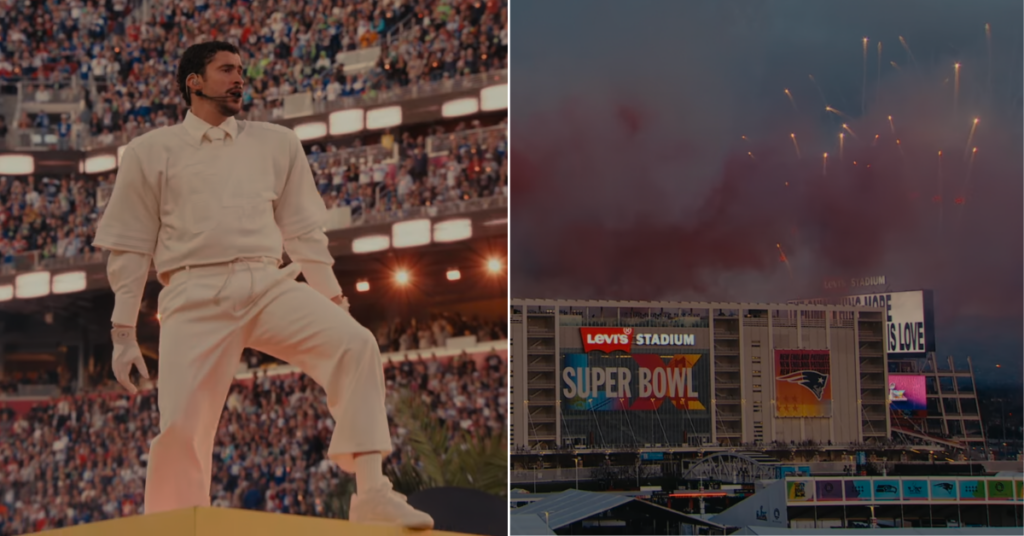
Bad Bunny’s Super Bowl halftime show was always going to spark conversation. From the moment his name was announced as the 2026 headliner, reactions were split, expectations were high, and debate was unavoidable.
By the time the lights went down at Levi’s Stadium, it had become clear that the performance would be remembered for far more than just the music.
The Seattle Seahawks may have defeated the New England Patriots 29–13 on the field, but as with every Super Bowl, millions of viewers were just as focused on what would unfold during halftime. This year, that attention was divided more than ever before.
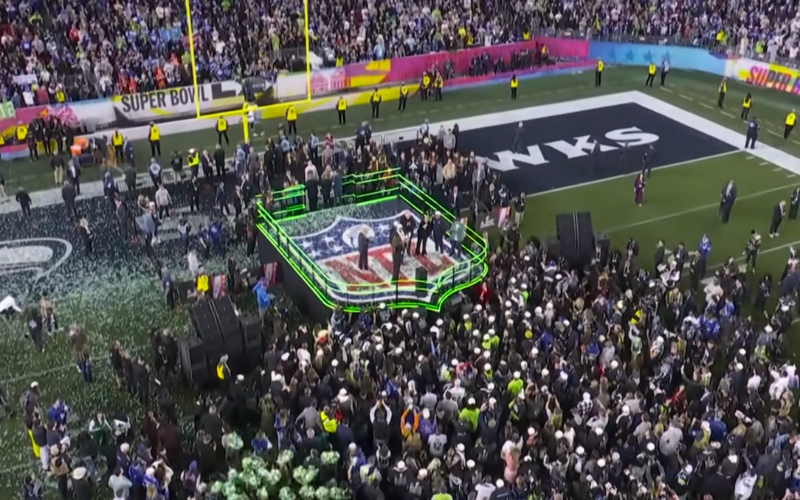
Bad Bunny, real name Benito Antonio Martínez Ocasio, took center stage for the NFL’s official halftime show, while a rival “All-American Halftime Show” streamed online via Turning Point USA. Almost instantly, social media lit up with comparisons and criticism.
The Puerto Rican superstar delivered a 14-minute performance that leaned heavily into Latin culture and identity.
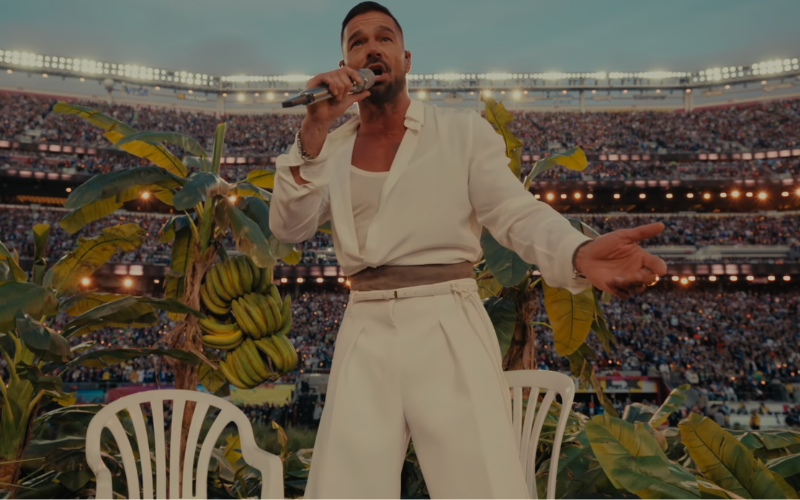
The set transported viewers through colorful, Latin-inspired scenes, from neighborhood bars to nail salons, while Bad Bunny performed a medley of his biggest hits, including Tití Me Preguntó, MONACO, and BAILE INoLVIDABLE.
High-profile appearances from Lady Gaga and Ricky Martin added to the spectacle, alongside cameos from Pedro Pascal, Cardi B, Karol G, and Jessica Alba. For fans, it was a celebration. For critics, it quickly became something else entirely.
Bad Bunny also made history as the first artist to perform an entire Super Bowl halftime show in Spanish. While many praised the moment as culturally significant, others said it left them disconnected.
Across social media, the same complaint appeared again and again: viewers said they couldn’t understand the lyrics and felt the performance didn’t match what they expected from a “traditional” Super Bowl halftime show. Some went further, branding it “the worst halftime performance in history.”
Comments ranged from blunt frustration to outright anger, with critics calling the show boring, confusing, or inaccessible. Several viewers admitted to switching channels midway through, opting instead for the alternative halftime broadcast.
Despite the backlash, the performance carried clear messages of unity. During the show, a billboard flashed the words “The only thing more powerful than hate is love,” while a football held by Bad Bunny read: “Together, We Are America.”
Those moments echoed comments the artist had made days earlier during his Grammy acceptance speech, where he spoke out against immigration raids and emphasized love over division.
President Donald Trump was among the most vocal critics. Shortly after the halftime show ended, he took to Truth Social, calling the performance “absolutely terrible” and “an affront to the Greatness of America,” adding that “nobody understands a word” of what was being sung.
Supporters were quick to push back, pointing out that non-American artists and performers singing in different styles and genres have long been part of Super Bowl history. Others argued the outrage said more about the audience than the artist.
While opinions remain deeply divided, one thing is undeniable: Bad Bunny’s Super Bowl halftime show has become one of the most talked-about, debated, and polarizing performances the event has ever seen.
Love it or hate it, the show has cemented its place in Super Bowl history not quietly, but loudly.
Featured image Credit: (Youtube/NFL)